The record McCoy Tyner made after the noise
Sahara, 1972.
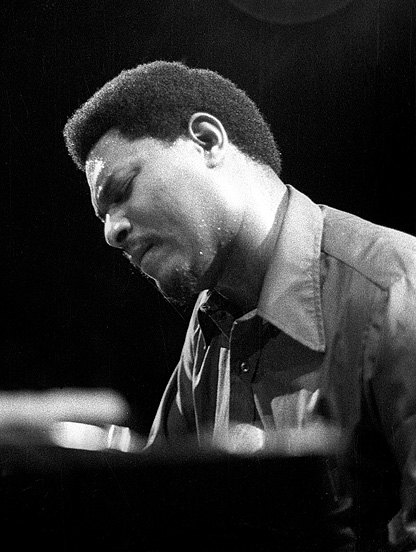
In December 1965, McCoy Tyner walked away from the best seat in jazz. He had been the pianist in the John Coltrane Quartet since 1960, and the band had made A Love Supreme. But Coltrane's music was getting freer and louder, and he had added more percussion, until the sound threatened to drown out Tyner and the drummer, Elvin Jones. Tyner put it plainly: "I didn't see myself making any contribution to that music. All I could hear was a lot of noise. I didn't have any feeling for the music, and when I don't have feelings, I don't play." Alice Coltrane took his chair (that story is Deep Listen No. 1).
Then came a thin stretch. In 1966 he rehearsed a new trio and tried to become a bandleader, but the work was so inconsistent that he considered a day job to support his family. He even asked about becoming a taxi driver. Slowly, he built a name of his own with a run of records for Blue Note between 1967 and 1970, including The Real McCoy and Expansions.
Then he signed with Milestone Records and found a producer he got along with, Orrin Keepnews, who had worked closely with Thelonious Monk and Bill Evans. In January 1972, at the Decca Recording Studio in New York, Tyner gathered three players: Sonny Fortune on saxophones and flute, Calvin Hill on bass, and Alphonse Mouzon on drums. Then everybody picked up something else. Tyner played piano, and also koto, flute, and percussion. Hill added reeds and percussion. Mouzon played drums, trumpet, reeds, and percussion. The music shows African and Eastern influences.
There are five tracks. It opens with "Ebony Queen," nine minutes long. Then "A Prayer for My Family," "Valley of Life," "Rebirth," and finally "Sahara," twenty-three and a half minutes. The record came out in July 1972.
It was a hit, by jazz standards. Sahara was named Album of the Year in the DownBeat critics' poll, earned Tyner the first two Grammy nominations of his career, and sold over 100,000 copies, his commercial breakthrough. AllMusic gave it five stars: "Tyner would go on to create several fine albums in the mid-'70s, but never again would he scale quite these heights. Sahara is an astonishingly good record and belongs in every jazz fan's collection."

Ebony Queen (9 minutes)
Listen along: five tracks, forty-eight minutes - "Ebony Queen," "A Prayer for My Family," "Valley of Life," "Rebirth," "Sahara." It was Tyner's first record for Milestone.
Where it leads: later in 1972 Tyner made Echoes of a Friend, a solo piano tribute to Coltrane. To hear the band he left, the record John Coltrane prayed in four parts. Sahara is in our free guide.
McCoy Tyner died at home in New Jersey on March 6, 2020, at eighty-one. He left the noise, found his own sound, and kept playing it for nearly fifty more years.
Heard it? Come talk about it in the listening room.
Get the next Deep Listen first.
New stories go to the email list before they go anywhere else. Free, one a week.