The record that cried out for spiritual unity
Spiritual Unity, 1965.
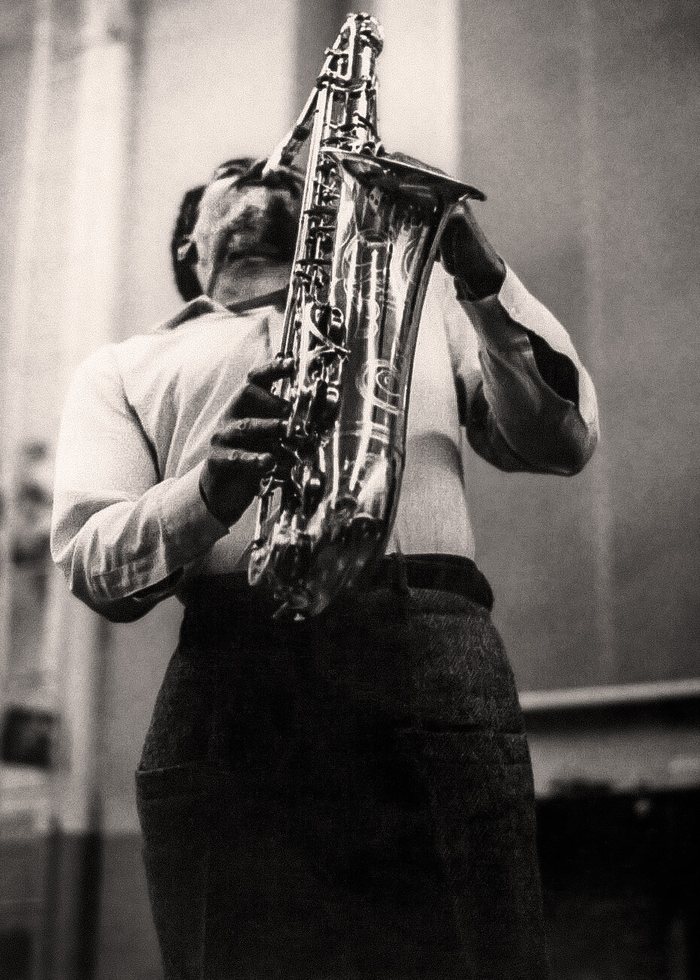
In late December 1963, a young lawyer named Bernard Stollman walked into the Baby Grand Café on 125th Street in Harlem, toying with the idea of starting a record label. Midway through the evening, a small man in a gray leather suit, his black beard carrying one patch of white, brushed past him and climbed onto the stage. Nobody introduced him. He just began to play. The band on the stand stopped, one instrument at a time, and sat back to listen. He played alone for nearly half an hour, then jumped down, covered in sweat. Stollman followed him and offered him five hundred dollars to be his new label's first artist.
Albert Ayler had traveled a long way to that stage. A church kid from Cleveland who played saxophone duets with his father, a teenage bebop prodigy they called Little Bird, a sixteen-year-old honking R&B tenor behind Little Walter, an Army bandsman in France. Back home nobody wanted him: too strange for Los Angeles, too strange for Cleveland. He had to go to Sweden to make his first record. When Stollman found him he was twenty-seven, and almost nobody in America knew his name.
The band he brought to the studio had no piano and no chords at all: Gary Peacock on bass, fresh from Bill Evans and a short turn standing in for Ron Carter with Miles Davis, and Sunny Murray on drums, who had found a way of playing that floated free of the beat. Ayler said it simply: "We weren't playing, we were listening to each other."
They recorded on July 10, 1964, at Variety Arts, a cheap little studio near Times Square that Folkways had used for field recordings. At one point the engineer fled the control room. The whole record came back in mono by accident; Stollman was horrified, then decided nobody would care, and in forty-plus years nobody has. Twenty-nine minutes of music. Ayler took the five hundred dollars against the advice of Cecil Taylor and others who told him to hold out for what he was worth. "I felt my art was so important that I had to get it out," he said. "I knew I had to play this music for the people."
The sound comes straight out of church: a huge, wide vibrato, like a gospel singer's, wrapped around melodies that feel like hymns and marches you somehow already know. Then the saxophone starts to cry, laugh, holler, speak in tongues. DownBeat printed a zero-star review - "not worth the paper it takes to review it" - right beside a rave calling it "the physical manifestation of a spiritual or mystical ritual." Time settled the argument. The Penguin Guide to Jazz gives it a crown. Pitchfork scored it 9.3 and ranked it among the thirty best albums of the 1960s.
Ayler mailed a copy to John Coltrane, who told Impulse! to sign him. After recording Ascension, Trane called him: "I recorded an album and found that I was playing just like you." Ayler's answer: "No man, don't you see. You were playing like yourself. You were just feeling what I feel, and were just crying out for spiritual unity." Ayler put it plainly later: "He was the father, Pharoah was the son, and I was the holy ghost." When Coltrane died in 1967, one of his last wishes was that Ayler and Ornette Coleman play at his funeral. Twice, Ayler pulled the horn from his mouth: once a cry of anguish, once a cry of joy.

Ghosts: First Variation (5 minutes)
Listen along: four tracks, twenty-nine minutes - "Ghosts: First Variation," "The Wizard," "Spirits," "Ghosts: Second Variation." It was the first record made for ESP-Disk, the little label that became the home of the avant-garde.
Where it leads: for the father and the son, the record John Coltrane prayed in four parts and the record Pharoah Sanders made after Trane. Spiritual Unity is in our free guide.
Albert Ayler was gone at thirty-four, in November 1970. Half a dozen years of music, and it still sounds like it is arriving from somewhere beyond.
Heard it? Come talk about it in the listening room.
Get the next Deep Listen first.
New stories go to the email list before they go anywhere else. Free, one a week.